
Creation Needs to Come First
How focusing on creating instead of consuming changes the way you grow

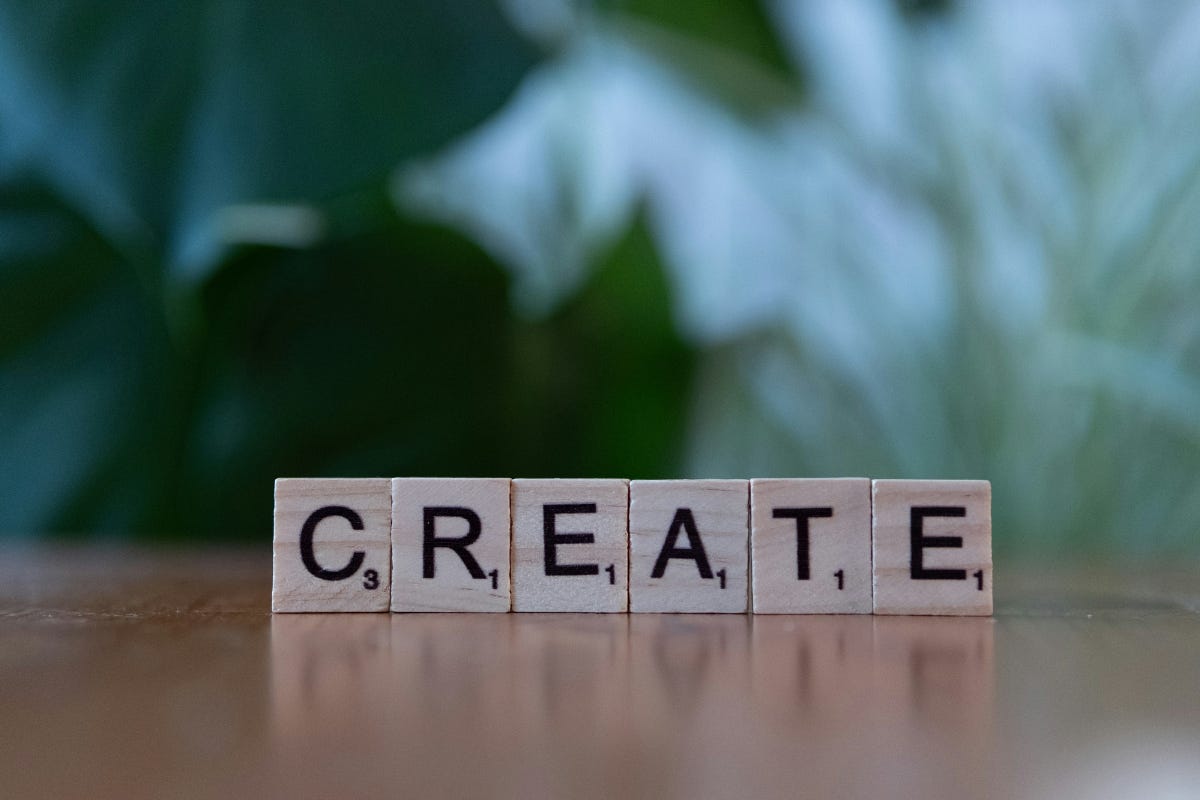
When I started web development, I carried over an old habit from my social work studies: the belief that I had to know everything by heart.
Back then, preparing for exams meant filling notebooks with definitions, memorizing theories, and underlining sentences until the page was more color than words. I treated web development the same way.
Every function, every snippet, every rule, I thought if I could memorize it all, I’d be safe. I copied tutorials word for word. I rewrote the code into neat notebooks, as if I were preparing for a test. I tried to stuff everything into my head.
But unlike social work theory, code doesn’t sit still on a page. It runs, it breaks, it refuses to cooperate. And no matter how many tutorials I consumed, when I sat down to build something of my own, I froze.
I was consuming endlessly and creating almost nothing. And it left me drained.
The Navigation Bar Moment
I still remember one particular evening. I was building a simple navigation bar. On mobile, it looked perfect. On the desktop, it fell apart.
That tiny switch between screen sizes kept me stuck for an hour. I checked the CSS, stared at the media queries, rewrote pieces that made no difference. Nothing worked.
At first, I got frustrated: Why isn’t this in any tutorial? Am I missing something obvious?
But after some trial and error, changing one thing at a time, refreshing again and again, I noticed a tiny detail I had overlooked.
Suddenly, the navbar snapped into place.
It was annoying, yes. But that bug taught me something I couldn’t have learned from just reading: sometimes the distance between “knowing” and “understanding” is as small as a single breakpoint.
The Real Lesson Hidden in Debugging
What surprised me wasn’t that I fixed the navbar. It was how, from that moment, debugging started to change me and take me on a journey.
I had read plenty about responsive design before. None of it made me truly see how elements behave between widths. Wrestling with my own broken navbar did.
That night shifted something deeper. Debugging became less about fixing code and more about learning patience. About slowing down and actually observing. About not rushing to the solution but training my eyes to notice the tiny misalignments.
It brought back memories from my social work studies, when I realized that understanding someone’s story wasn’t in the words alone but in the silences, the tentative shifts, the delicate nuances. Debugging mirrored that experience. Insight and growth appeared in the patient, attentive moments when I refused to give up.
Why Creation Matters
That broken navbar ended up teaching me more than the tutorials ever could. It showed me the limits of endless consumption.
I could read, scroll, and highlight all day, but nothing stuck until I did something with it.
Creation has this strange quality: it leaves a trail. A working line of code. A note you scribbled in the margin. A half-broken experiment. These things stay. You can return to them. You can improve them. Sometimes, someone else can use them.
Consumption, on the other hand, disappears the moment you finish.
And it’s not just about coding. Think about photographing the sky. You can scroll through thousands of photos online, read every tutorial about composition, light, and color, but until you stand under the sky yourself, camera in hand, noticing the subtle shades and fleeting clouds, the lesson remains abstract.
Creation is where knowledge becomes embodied.
The Weight of Small Creations
We often underestimate the smallest things we create.
A tiny tweak that finally stops a website menu from jumping around on different screens. A little piece of code that makes a form field behave exactly as it should. A quick note you left yourself explaining a tricky step at the time, it feels forgettable.
But later, you come back to it and think, Oh, I actually solved this.
Or a colleague uses your snippet and says, “This made my work so much easier.”
Or you notice yourself predicting where a bug might appear, or fixing a layout problem before anyone else notices.
It’s like those small everyday wins in life: arranging your desk so everything is easy to find, finding the perfect angle for a photo, or figuring out a shortcut that saves you a few minutes every day.
Those small acts of creation add up. They become proof that you’ve made something, not just watched or read about it.
They need to exist because of you.
Coming Back to the Story
When I think about those old notebooks from my student days, I don’t regret them. They were my way of learning at the time. But I see now that they were only the foundation.
The real growth began when I stopped copying and started building. When I moved from highlighting other people’s thoughts to debugging my own messy navbar.
So if you find yourself stuck in that loop, scrolling, bookmarking, consuming without ever creating, try one small thing.
Fix one line. Write one snippet. Break it, repair it, save it. Tomorrow, do another.
It can be small, clumsy, half-done. What matters is that it came from your hands. That’s enough to turn consuming into creating.
Closing Thoughts
If this story landed with you, maybe it’s just a kind push. Close the extra tabs, stop saving guides you’ll never touch, and put something in front of you that you can actually move, break, or tweak.
The small act of shaping, testing, failing, and trying again is where real learning happens. You’ll see things in a new way, understand details you couldn’t have from reading alone, and start to notice what really matters.
So, what are you working on right now? What’s the tiny problem you solved or the small thing you built that felt like a minor victory? Share it if you want, or just let it sit. Either way, it matters because doing is different from consuming, and every little effort leaves a footprint only you could make.
Tech with heart. Keep building. Keep learning. Keep going, my dear friend.
I absolutely loved reading this.
This is the fundamental thing we lose with AI based solutions. I've always said that software engineering is baptism by fire. Every single mistake or incident I've been in is what's effectively taught me the most.
It's my chance to play Batman. And in playing Batman, I learn a bit about front-end engineering, back-end engineering, a different language, a different framework, server management, customer communication, security and liability.
It can be the most stressful but the most learning time.