
Every Product Creates a Version of Its Users
What No-Face from Spirited Away taught me about human behavior, incentives, and design

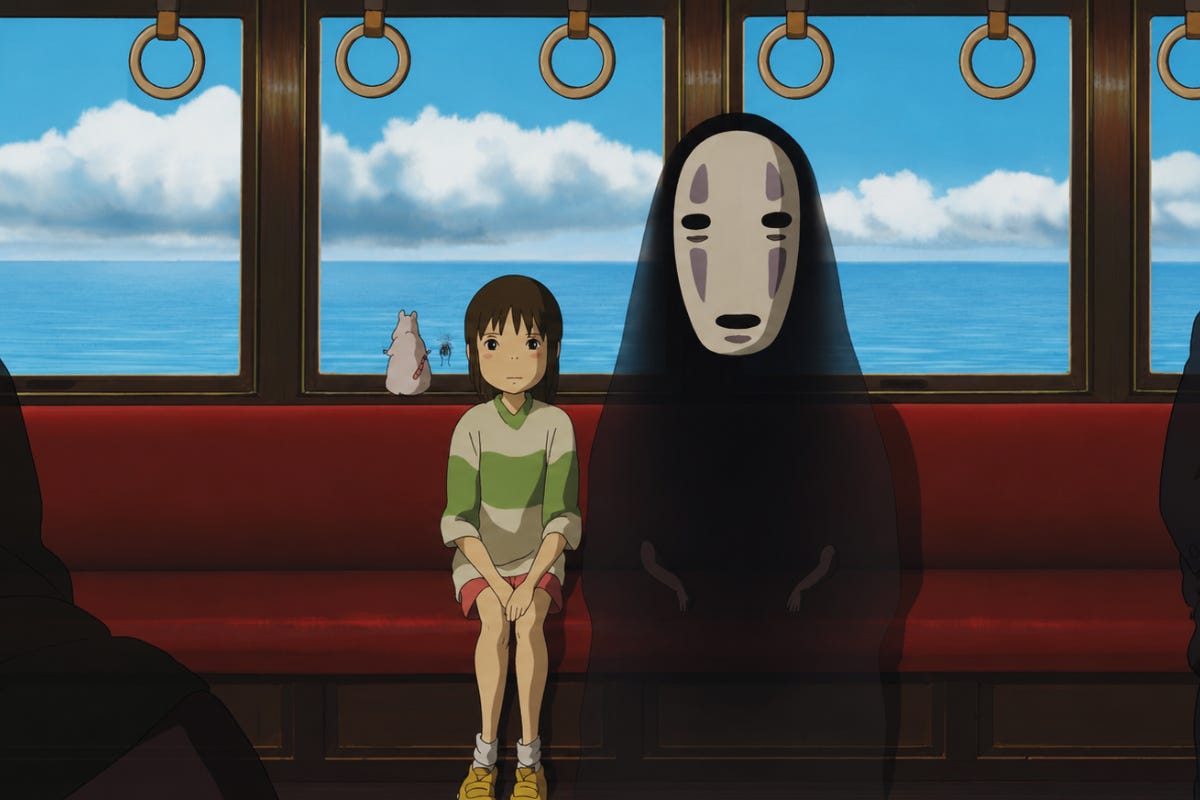
Over the past year, Spirited Away has quietly become one of my favorite stories.
Sometimes my family watches it together on the screen. Other times, I listen to its beautiful music while I study how to make better apps and websites.
I keep coming back to its world.
For those who do not know the movie, it is about a young girl named Chihiro who gets trapped in a strange spirit realm. She is forced to work in a magical bathhouse run by Yubaba, a mean witch obsessed with money.
Along the way, Chihiro meets a peculiar character named No-Face. He is a lonely spirit who transforms completely depending on where he is.
The more I watch the movie, the more I think about him.
For years, people thought No-Face was just a lesson about greed or losing your identity. But when I look at him through my work in technology, I see a different truth about human behavior:
No-Face was not born bad, and he was not born good. He became what his environment rewarded.
The Same Spirit, Two Different Worlds
The most compelling part of the story is how fluid identity becomes. No-Face adapts entirely to his surroundings.
Same character. Completely different places.
When No-Face is in the bathhouse, he sees the workers running after gold. He sees how people gain power, and he notices that everyone wants to make a deal. He does not just wake up one day wanting to be destructive. He learns the rules of the house.
By the end of the movie, he leaves that loud ecosystem. He accompanies Chihiro to the quiet home of Zeniba, the kind sister of the bad witch.
What happens there taught me a profound lesson about human nature.
His transformation happens without anyone yelling at him, punishing him, or trying to fix him. He changes because his surroundings change.
The bathhouse rewards taking too much; Zeniba’s home rewards being peaceful.
The bathhouse cares about money; Zeniba cares about people.
The bathhouse drives you to consume; Zeniba gives you space to create, like helping her spin thread.
By changing the environment around him, Zeniba brings out the good side of the very same spirit.
We Still Have a Choice
When we look at how people act online today, we often ask: Why are people so mean on the internet? Why do we spend so much time looking at things that make us angry?
The movie asks us to look at a different question:
What kind of ecosystem taught them to act that way?
To be clear, this does not mean people have no choice. Saying No-Face is just a sad victim would be wrong. He is still responsible for his actions. He chooses to swallow the workers. He chooses to give in to his anger.
Our environment matters immensely, but our choices matter too. Both are true.
The tragedy is that the setup of the bathhouse amplified and accelerated his worst parts. This mirrors our modern conversations about technology. We cannot say users are entirely innocent when they act badly, but we must admit that the apps we build make that bad behavior much louder.
What the Bathhouse Rewards
In design, we talk about tricks that keep people on a website, make them click more, or drive them to buy things.
In the bathhouse, the witch built a system where gold is the only currency of worth. No-Face wants to fit in and be seen, so he does the only thing the system cares about: he generates gold.
He overeats to look important. He gives gifts to buy affection.
He is a user trying his best, but he is operating inside a broken system.
If an app rewards conflict by giving you more visibility, people will fight. If an app rewards mindless clicking with temporary hits of dopamine, people will click until they feel empty.
When we see bad behavior online, we are often seeing people react to the digital houses we built for them.
The Houses We Build
As the people who create digital spaces, this changes our job. Making a good app is not just a nice extra feature we add at the end. The app is the environment itself.
Our goal should not be to keep people clicking at all costs. Nor should it be to lecture people to act better while they are trapped in a flawed system. We have to look closely at the digital spaces we construct every day.
What are we encouraging? What happens to a person who joins our app looking for connection, but only finds loops of buying and selling? Does our design help a person grow, or does it leave them empty inside, waiting for the interface to tell them what to do?
Because the foundational rule of design remains true: Every product changes the person who uses it.
The question is not if people change when they use our tools. The question is: Who are they becoming?
Beyond the Screen
The more I think about Spirited Away, the less I think No-Face is a story about a spirit. I think it is a story about all of us.
We spend our lives moving through different spaces: jobs, online communities, apps, friendships, and families. Each one rewards something different. Each one shapes us in ways we rarely notice.
As I reflected on No-Face’s journey, I found myself thinking about my own environments and the versions of myself they have brought out. The ultimate question is one we must ask ourselves every day: What are the places we live in turning us into?
I’d love to hear what came to mind for you.
I really liked your reading of No-Face — born neither good nor bad, with the environment deciding which side gets drawn out.
In East Asian thought, there are three old positions on human nature: that it is good (Mencius), that it is bad (Xunzi), and that it is neither good nor bad (Gaozi). Your reading of No-Face felt, to me, closest to the third — Gaozi's.
Gaozi compared human nature to swirling water: cut a channel east and it flows east, cut one west and it flows west. The water itself has no fixed direction. No-Face — devouring in the bathhouse, gentle in Zeniba's home — moves just like that water.